
Collaboration needs trust: Reflections from our 2026 Sensemaking Retreat
One of the most important lessons we've learnd as we've grown and matured, is that collective action requires a constant process of trust building.
One of the most important lessons we've learnd as we've grown and matured, is that collective action requires a constant process of trust building.
The Collaborative convened its 27 member organizations in Budapest from May 11-15, 2026, for a five-day retreat designed to move the alliance beyond transactional partnership toward a trust-based operating system. Eleven structured sessions spanned requisite diversity mapping, deep-dives on the operating system, portfolio framing workshops, and open spaces. Nearly 80 audio transcripts document not just what was decided, but how the group navigated tensions and generated an atmosphere of trust.
Tangible Shifts
The retreat delivered tangible strategic shifts. Participants co-developed a tipping points framework that integrates social and environmental dimensions as a new portfolio allocation logic, grounded in concrete climate leverage points like the risk of AMOC collapse, fossil-fuel-free zones in the Amazon, and bioregional finance infrastructure. Working groups formed immediately around bioregional finance and governance, digital infrastructure to address knowledge fragmentation, and fundraising to share intelligence on what resonates with major funders.
Critically, the retreat surfaced structural innovations the Collaborative needs to sustain itself. A universal basic stipend was proposed to equalize participation capacity across organizations of different sizes, as well as an ombudsman function for accountability as membership scales.
The Importance of building trust
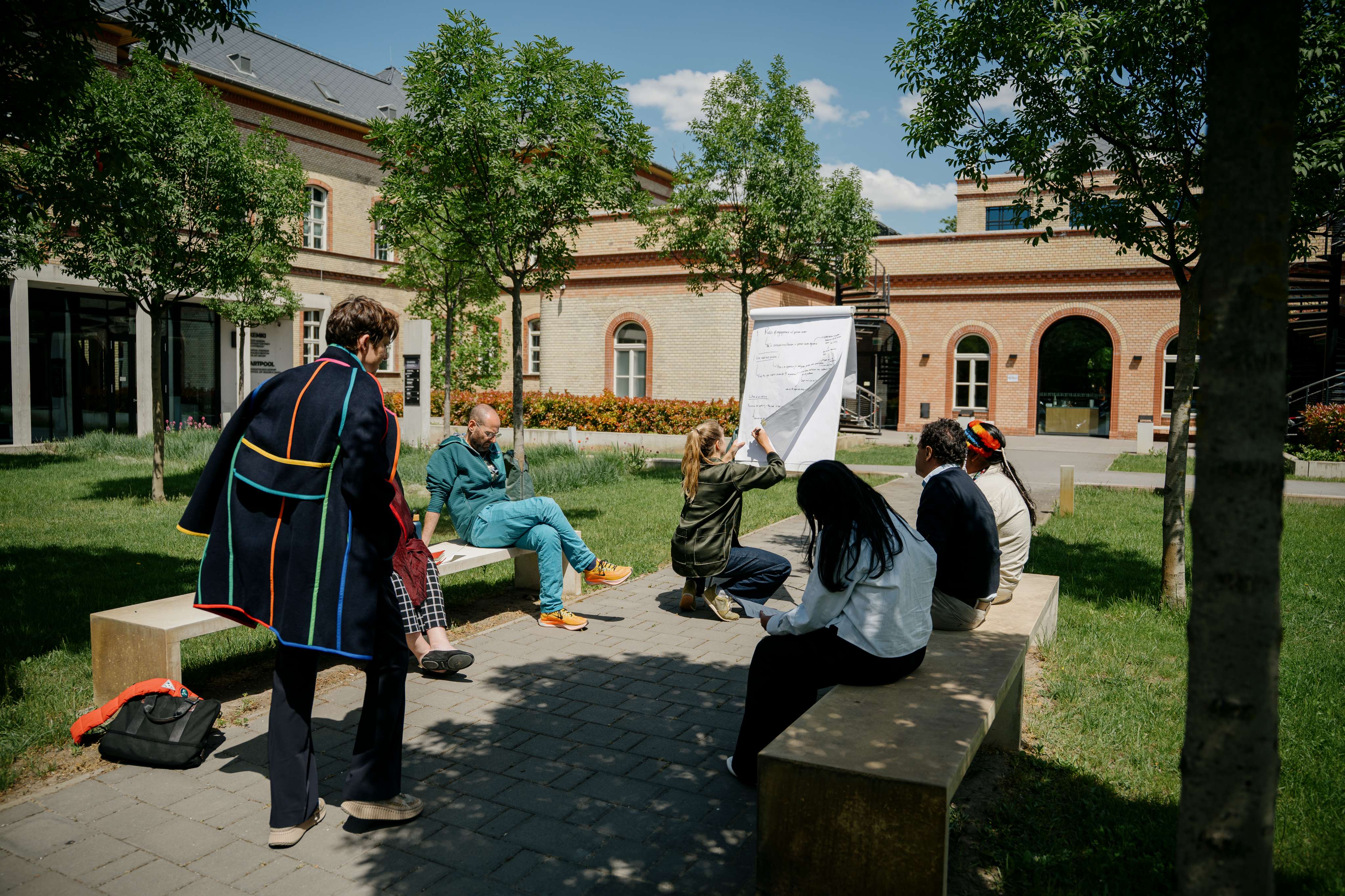
The value of in-person trust-building was evident in participants growing willingness to work through the tensions in the group. For example, sessions on the operating system proposal revealed potential conflicts of interest (allocators proposing projects while organizational survival is on the table), capacity constraints (the strain of full-time jobs plus the Collaborative workload), and the gap between vision-keeper sensemaking and on-the-ground implementation teams. Participants worked through these tensions, by proposing concrete mechanisms including repurposing weekly calls and implementing tier-two practitioner convenings to bridge the implementation gap. Additionally, the open space session generated commitments that are independent of funding like mentoring programs, peer groups, or quarterly finance calls. This proves that the mutualism enshrined in the SymbiOS operating system extends beyond capital allocation into knowledge, access, and capacity-sharing.
How we are Moving Forward
What emerged is a portfolio of portfolios organized around enabling conditions (legal, narrative, capabilities), place-based action (bioregions, cities, local resilience), and transformative institutional shifts (health infrastructure, alternative currency, military partnerships on climate provisioning). The retreat's synthesis reveals an alliance moving from "what should we fund?" to "what can only we do together?", positioning the Collaborative as infrastructure for coordination without homogenization. That shift, and the trust-based relationships that underpin it, could not have happened on Zoom.
